
ADA Title II, GAAD, and Your Website: What Nonprofits and Small Businesses Need to Do NowMay112026
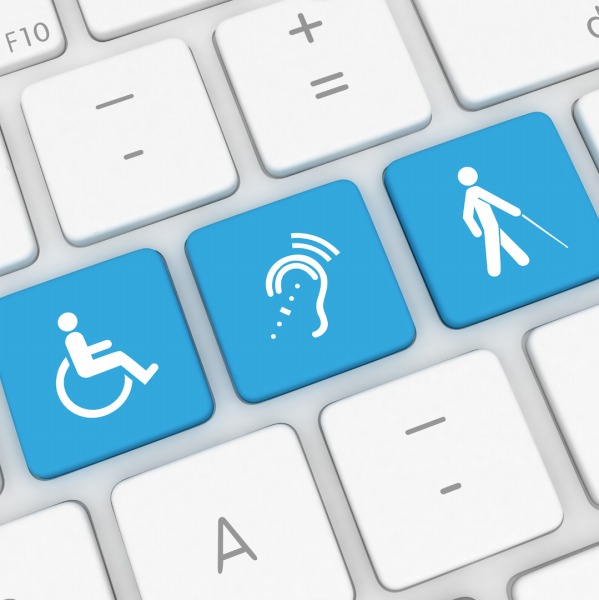
Every year on May 21, the global tech and business community observes Global Accessibility Awareness Day (GAAD) — a day dedicated to ensuring that the digital world is open and usable for everyone, including the more than 61 million Americans living with a disability.
This year, GAAD arrives at a particularly important moment for nonprofits and small businesses. Updated ADA Title II regulations have expanded web accessibility requirements, and organizations that haven't addressed their digital accessibility are facing new legal and reputational exposure.
At HostingCT, we work with nonprofits and small business owners every day. And this is the conversation we're having with nearly every client right now.
Here's what you need to know.
What is ADA Title II - And Why Should Your Business Care?
The Americans with Disabilities Act (ADA) has long required that public entities provide equal access to their services. Title II of the ADA specifically covers state and local government entities, but recent regulatory updates have significantly expanded the scope of who is affected and what standards apply.
The U.S. Department of Justice now requires covered entities to meet the Web Content Accessibility Guidelines (WCAG) 2.1 Level AA — the international standard for accessible web content. This means that websites, mobile apps, and digital documents must be designed to work for people with a wide range of disabilities.
Nonprofit organizations and small businesses that contract with or receive funding from government entities, or that serve the public, are increasingly expected to meet these standards as well. And even where Title II doesn't directly apply, the legal landscape around web accessibility is shifting rapidly. Demand letters and DOJ complaints have increased significantly in recent years.
The bottom line: web accessibility is no longer optional for organizations that want to protect themselves and truly serve their communities.
What Does an Accessible Website Actually Look Like?
Most website owners are surprised to learn how many accessibility issues their site has — because most of these issues are invisible to the average sighted, able-bodied visitor.
Common problems include:
Images without alt text — Screen readers (used by blind and low-vision users) can't interpret images unless alternative text is provided. Without it, a significant portion of your content is simply invisible to those users.
Poor color contrast — Text that blends into the background is difficult or impossible to read for people with low vision or color blindness.
Unlabeled form fields — If your contact form, donation form, or signup fields aren't properly labeled, they're essentially unusable for screen reader users.
No video captions — Any video content without captions excludes deaf and hard-of-hearing visitors.
Keyboard navigation failure — Many users with motor disabilities rely entirely on a keyboard (or keyboard-equivalent device) to navigate the web. If your site requires a mouse, you're excluding them.
The good news is that most of these issues are fixable — often without a full website rebuild.
The Business Case: Accessibility is Good for Everyone
Here's something that often surprises our clients: fixing accessibility issues almost always makes a website better for every visitor, not just those with disabilities.
Accessible websites tend to load faster, have cleaner code, and are structured in ways that search engines prefer. In fact, many WCAG standards overlap directly with SEO best practices. Alt text, proper heading structure, descriptive link text — these help Google just as much as they help a screen reader user.
Accessible design is also clearer design. Sufficient contrast, logical layouts, and descriptive labels benefit users on mobile devices, in bright sunlight, in noisy environments, or who simply prefer straightforward navigation.
When you invest in accessibility, you're investing in a better experience for your entire audience.
How HostingCT Can Help
At HostingCT, we offer comprehensive web accessibility audits and full remediation services for nonprofits and small businesses. We assess your website against WCAG 2.1 AA standards, provide a prioritized findings report, and implement the fixes — so you don't have to navigate this alone.
In honor of Global Accessibility Awareness Day on May 21, we're offering free accessibility audits to our community. This is a no-obligation review of your website against current ADA standards, with clear guidance on next steps.
Whether you're concerned about compliance, want to expand your reach, or simply believe in building a more inclusive web — we're here to help.
→ Schedule Your Free Accessibility Audit: https://hostingct.com/request-a-call4
→ Learn More About Our Accessibility Services: https://hostingct.com/webdesign/accessibility/
Return